Buffering Broke America First: The Quiet Revolution Happening in Your Download Folder
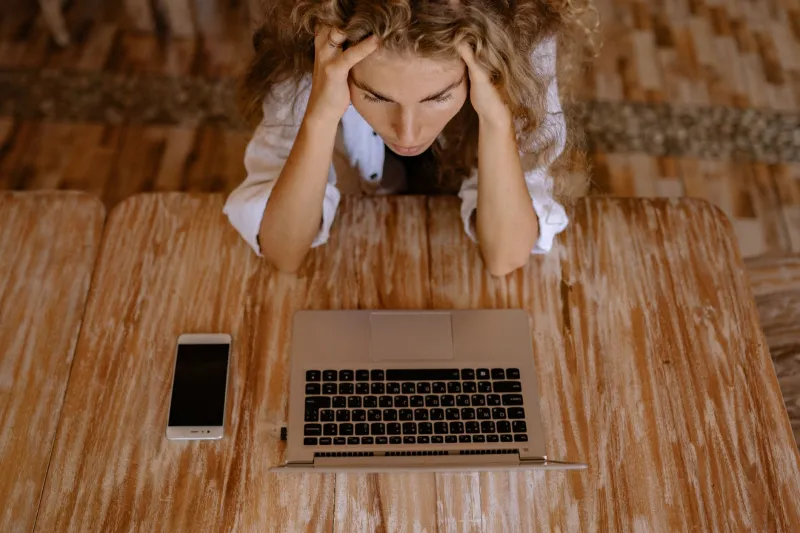
There's a version of America where streaming just works. Where you hit play on a Friday night, and nothing spins, nothing stutters, nothing drops to 480p right when the movie gets good. That version of America exists — but it's not the whole country, not even close.
For tens of millions of people scattered across rural counties, mid-size towns, and even pockets of major metros, the streaming dream has always been a little bit of a lie. And a growing number of them have quietly stopped waiting for it to get better. They've started downloading instead.
The Numbers Don't Lie (Even If the Carriers Do)
The FCC's own broadband data — long criticized for overstating coverage by counting a census block as "served" if even one household has access — paints a generous picture of American connectivity. Independent analyses tell a different story. According to data from Microsoft, as recently as 2022, roughly 120 million Americans were not using the internet at broadband speeds, even in areas the FCC had marked as covered.
Streaming a 4K title on Netflix requires a sustained 25 Mbps connection. HD needs at least 5 Mbps. For households stuck on rural DSL lines, satellite connections with high latency, or fixed wireless that struggles in bad weather, those numbers are aspirational at best. The result? An enormous population of viewers who've essentially been priced out of the streaming experience — not by subscription costs, but by infrastructure.
That's where downloading comes in. And it's not a workaround. For a lot of people, it's the only real option.
Profiles in Practicality
Talk to people who've made downloading their primary entertainment method, and you'll hear a common thread: they didn't choose this out of ideology. They chose it because it worked.
A family in the Texas Hill Country describes their routine of downloading a week's worth of movies every Sunday when their satellite connection is freshest and traffic is low. A remote worker in rural Vermont talks about preloading her laptop with shows and films before heading back to her cabin after a trip to town, treating the local library's Wi-Fi like a provisioning stop. A couple in eastern Kentucky says they haven't tried to stream anything live in two years — the lag made it feel "like watching TV through a screen door."
These aren't edge cases. These are millions of households operating in what researchers sometimes call the "connectivity shadow" — technically within reach of a broadband provider, but practically underserved in ways that make real-time streaming unreliable.
The Streaming Industry's Convenient Blind Spot
Here's the thing that doesn't get said enough: the major streaming platforms have almost zero financial incentive to acknowledge this problem. Their subscriber metrics, their marketing language, their investor presentations — all of it is built around the assumption of ubiquitous, reliable broadband. Admitting that a significant portion of their potential audience literally cannot use their product as designed would be awkward at best.
So they don't. Instead, they tout "download for offline viewing" as a premium convenience feature — a nice-to-have for airplane rides and gym sessions — rather than acknowledging it as the primary access method for a huge swath of the country. The framing keeps the infrastructure problem invisible.
Download platforms, by contrast, are built around a different assumption: that your connection is a variable you shouldn't have to fight. You grab the file when you can, you watch it when you want, and the quality doesn't depend on your ISP having a good night.
Geography Is Destiny (At Least for Streaming)
If you map broadband access quality against download adoption rates, the correlation is striking. States with the lowest average internet speeds — Mississippi, Arkansas, Montana, West Virginia, parts of Alaska — consistently show the highest rates of offline media consumption. This isn't a coincidence. It's cause and effect.
But it's not just rural America. Urban dead zones exist too. Older apartment buildings in cities like Chicago and Philadelphia often have infrastructure that can't support the bandwidth demands of a household where multiple people are streaming simultaneously. Low-income neighborhoods frequently have fewer competitive broadband options, meaning residents are stuck with a single provider that has little reason to upgrade service or lower prices.
The digital divide, in other words, isn't just about access to the internet. It's about access to a quality of internet that makes modern streaming viable. And that divide is wider than most coastal tech coverage suggests.
Downloading as Infrastructure Workaround
What's interesting about the download trend is that it's essentially a consumer-level fix for a government and corporate failure. People aren't waiting around for their ISP to upgrade the local node or for Congress to pass another broadband subsidy bill. They're adapting.
And the tools have gotten genuinely good. Download quality has kept pace with streaming quality — you can grab a 4K HDR file that will look better on your TV than most streams, because you're not subject to the compression that streaming services apply in real time to manage bandwidth. Storage is cheap. Organization software has improved. The experience of building and managing a local media library is less intimidating than it's ever been.
Platforms like DownloadMing exist precisely because this need is real and large and not going away. The audience isn't niche. It's anyone who's ever watched a loading screen long enough to start questioning their life choices.
The Bigger Picture
There's a policy argument buried in all of this that doesn't get made often enough: the popularity of downloaded media is, in a very direct way, a symptom of America's infrastructure problem. Every person who's switched to downloading as their primary entertainment method is, in a small way, casting a vote of no confidence in the country's broadband situation.
The FCC's Affordable Connectivity Program and the infrastructure bill's broadband provisions are steps in the right direction. But these things move slowly, and the gap between policy announcement and actual fiber running to an actual house in an actual rural county can be measured in years, sometimes decades.
In the meantime, people are solving the problem themselves. They're downloading. They're building local libraries. They're treating their media collection the way an earlier generation treated a pantry full of canned goods — something you stock up on when you can, so you're not dependent on the supply chain holding up.
It's practical. It's smart. And it's a lot more common than the streaming industry wants you to realize.
If your connection has ever made you feel like you're watching entertainment through a straw, you're not alone — and you're definitely in the right place.