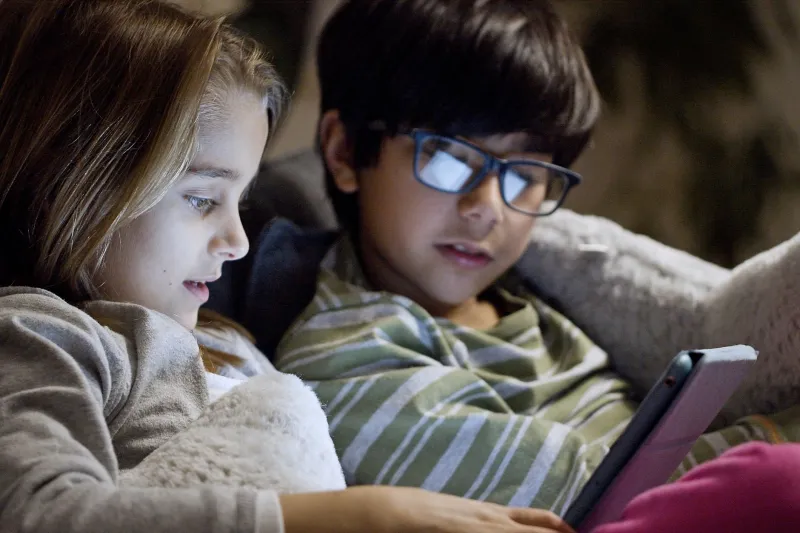
Why Your Group Movie Night Deserves Better Than a Buffering Wheel

There's a specific kind of social agony that every American household has experienced at least once. The lights are low, the snacks are out, everyone's finally settled on the couch, and then — right in the middle of the opening scene — the screen freezes. The little spinning circle shows up. Someone mutters something. Someone else checks their phone. The moment is gone.
Streaming has done a lot of things right. But group movie nights? That's where it quietly falls apart, and most people have just accepted the frustration as part of the deal. They shouldn't have to.
Downloaded content doesn't buffer. It doesn't care how many people are on your WiFi. It doesn't renegotiate its quality mid-scene because your neighbor decided to upload a video at 8:47 PM. When the file is on your device, it plays — cleanly, completely, every single time. For solo viewing, that reliability is a nice bonus. For group watching, it's the whole ballgame.
The Bandwidth Math Nobody Thinks About Until It's Too Late
Most home internet plans are sold on peak-condition numbers. "Up to 200 Mbps" sounds great until you factor in that movie night means multiple phones on the network, possibly a gaming console running updates in the background, and a streaming service that's actively adjusting your video quality based on real-time bandwidth availability.
Streaming a 4K movie requires a sustained connection of around 25 Mbps just for the video feed. Add a few smartphones, a tablet someone's using to look up the actor's other movies, and whatever smart devices are quietly doing their thing in the background — and you're eating into that budget fast. The stream doesn't crash dramatically; it just quietly drops to 1080p, then 720p, then that soft, slightly blurry version of the movie that nobody wants to admit looks bad.
A downloaded file doesn't touch your live internet connection during playback. It's already there. The bandwidth situation in your house becomes completely irrelevant once the download is done.
The Social Calculus of Uninterrupted Viewing
Here's something the tech specs don't capture: the social cost of interruptions during group watching is genuinely high. Film has a rhythm. Scenes build. Jokes land in sequence. Tension accumulates. When a buffer pause hits at the wrong moment, you don't just lose three seconds of runtime — you lose the emotional setup that the director spent the previous five minutes constructing.
With a group, that disruption compounds. People start talking. Someone makes a joke about the internet. Someone else asks what just happened. By the time the stream resumes, half the room has mentally checked out of the scene, and the other half is trying to reconstruct the context. It's a small thing, but it happens enough times in a single movie that the overall experience takes a real hit.
Downloaded movies eliminate this entirely. The file plays from start to finish without negotiating anything with anyone. The viewing experience becomes what it's supposed to be — a shared, unbroken thing.
Watch Parties, Family Nights, and the Case for Pre-Loading
Think about the specific situations where group movie watching actually happens. A family film night with kids who have approximately zero patience for technical difficulties. A watch party with friends where half the fun is the collective reaction in the room. A holiday gathering where someone suggests putting on a movie and you actually want it to work.
In all of these scenarios, the person managing the playback is also trying to be a participant. Nobody wants to be the one fiddling with router settings or restarting the app while everyone waits. Pre-downloading the movie beforehand means you show up to your own event ready to go. Hit play, walk away from the TV, grab a drink. Done.
This is especially relevant for households with mixed device situations — older smart TVs, external media players, or setups where the streaming app experience is already a little clunky. A downloaded file played through a solid media player is almost always a smoother experience than navigating streaming app interfaces on hardware that's a few years old.
The Quality Consistency Factor
Beyond the buffering issue, there's a subtler quality argument worth making. When you stream, the platform controls your picture quality in real time based on network conditions. When you download, you choose the quality file upfront and that's what you get — locked in, consistent, no surprises.
For a group watching on a large screen, the difference between a genuinely sharp 4K file and a stream that's been compressed on the fly is visible. Especially in darker scenes, fast action sequences, or anything with a lot of visual detail. Downloading lets you pre-select the version of the movie that your TV deserves to show, rather than leaving that decision to an algorithm responding to your ISP's traffic patterns at 9 PM on a Friday.
The Simple Argument
None of this is particularly complicated. The core logic is pretty hard to argue with: a file that lives on your device plays better than a file that has to travel across the internet in real time, especially when multiple people and devices are competing for the same connection.
Group movie watching is one of those genuinely good things — a reason to be in the same room, pay attention to the same thing, and share a couple of hours together. It deserves better than a spinning buffer wheel and a quality drop at the worst possible moment.
Pre-download the movie. Have the snacks ready. Let the night actually work the way it's supposed to.