2 AM and Downloading: The Quiet Night Owl Economy Reshaping How America Builds Its Media Collection
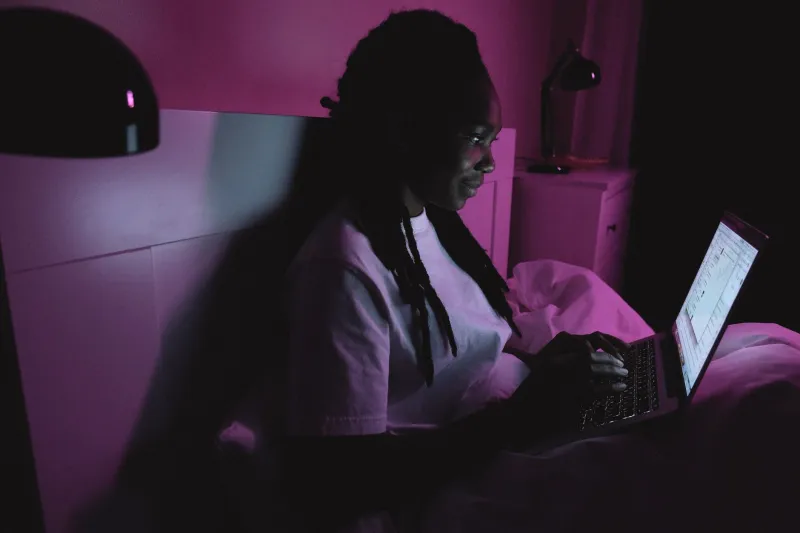
The house is dark. The kids are asleep. The dog has stopped pacing. And somewhere in a suburban living room — or a cramped studio apartment, or a home office with one too many monitors — someone is carefully curating a download queue like it's the most important thing they'll do all week. Because for them, it genuinely might be.
Late-night media downloading has become one of America's most quietly widespread hobbies. Nobody's throwing a parade for it. There's no hashtag trend. But spend any time in collector forums, media server communities, or even just the comment sections on entertainment download platforms, and a consistent picture emerges: a huge chunk of serious digital media collectors do their best work after midnight.
So what's actually going on here?
The Bandwidth Math That Makes Night Owls Smarter
Let's start with the practical stuff, because it's genuinely compelling. Internet infrastructure in the US runs on shared pipelines. During peak hours — roughly 7 PM to 11 PM — residential networks get hammered by everyone streaming, gaming, video calling, and doing whatever else modern households do simultaneously. That congestion is real, and it hits download speeds hard.
After midnight, that congestion drops dramatically. The same connection that delivers a sluggish 40 Mbps at 9 PM on a Tuesday can cruise at double that speed by 1 AM. For someone downloading large media files — we're talking multi-gigabyte 4K rips, lossless audio albums, full season TV archives — that speed difference isn't trivial. It's the difference between a download finishing before you wake up versus sitting at 67% when your alarm goes off.
Some ISPs have historically offered tiered pricing with off-peak discounts, and while those formal programs have largely faded, the underlying infrastructure reality hasn't. The pipes are genuinely less crowded at 2 AM, and regular collectors know it.
The Psychology of Building Something While the World Sleeps
But here's where it gets more interesting, because the bandwidth argument only explains part of the behavior. Talk to people who do this regularly, and you hear something else underneath the practical reasoning — something closer to ritual.
There's a particular satisfaction to late-night collection building that's hard to articulate but easy to recognize. The interruptions are gone. Nobody's asking you to look at something, respond to a message, or be present for anything. It's just you, your queue, and a steadily filling hard drive. For a lot of Americans whose days are relentlessly fragmented by notifications and obligations, that uninterrupted focus feels genuinely luxurious.
Collectors describe it in almost meditative terms. One person in an online media forum put it simply: "Daytime is for consuming. Nighttime is for collecting." That distinction matters more than it might seem. Downloading with intention — actually thinking about what you want in your library, why you want it, how you want it organized — is a different mental activity than passively scrolling a streaming service. The quiet hours make space for that kind of deliberate engagement.
There's also something to the collector's psychology of building something while the world is unaware. Your library grows in the dark. By morning, it's larger than it was. That's a small but real form of satisfaction that serious collectors find genuinely motivating.
The Night Queue as a Ritual, Not Just a Habit
Ask a committed late-night downloader about their process and you'll often find it's more structured than you'd expect. Many describe a consistent pre-sleep ritual: spend 15-20 minutes adding to the queue, set download priorities, maybe reorganize a folder or two, then let the machine run while they sleep. Wake up, check what completed, adjust for the next night.
It's the digital equivalent of setting a slow cooker before bed. You do the intentional work upfront, let the automated process handle the execution, and wake up to something finished. For people who value efficiency and dislike wasted time, it's a genuinely elegant system.
This behavioral pattern also tends to produce better-organized libraries than impulse downloading during the day. When you're tired and winding down, you're less likely to grab things randomly and more likely to make considered additions. The collection grows with more purpose. Less digital clutter, more genuine curation.
What It Reveals About How Americans Actually Want to Consume Media
Zoom out a little and the late-night download phenomenon says something broader about the current state of American media consumption. People are increasingly rejecting the passive, platform-dictated model of entertainment access — the one where an algorithm decides what's available, when it's available, and in what quality.
Building a personal library, even if it happens at 2 AM in small increments, is an act of reclaiming control over your own entertainment experience. You decide what's in your collection. You decide the format and quality. You decide when you watch it, on what device, with what audio setup. The platform doesn't get to pull it because of a licensing deal, and the recommendation engine doesn't get to bury it under seventeen shows you didn't ask for.
The timing — specifically the late-night timing — amplifies that sense of autonomy. You're not just collecting on your own terms; you're doing it in your own time, outside the hours when the rest of the world is making demands on your attention.
The Community That Runs on Night Shift
One underappreciated aspect of late-night downloading culture is how communal it actually is, despite being a largely solitary activity. Online forums and communities dedicated to media collection are genuinely most active in the late-night hours. People share what they're adding to their queues, ask for recommendations, troubleshoot metadata issues, and compare notes on file quality — all while their downloads run in the background.
There's a loose camaraderie among the night-shift collectors that doesn't exist in the same way during daytime browsing. Something about the shared late-hour context creates a different conversational tone — more relaxed, more genuine, less performative. The people who are up at 2 AM building media libraries are self-selected for a certain kind of intentionality, and that tends to make for better conversations.
The Takeaway for Serious Collectors
If you're not already working with a late-night download schedule and you're serious about building a quality media library, it's worth experimenting with. Set your queue before bed. Let the off-peak hours do the heavy lifting on your larger files. Wake up to a slightly bigger, slightly better-organized collection.
Beyond the practical benefits, you might find that the ritual itself is part of the appeal. In a media landscape that increasingly wants to rent you access to content on its terms, building something of your own — quietly, deliberately, while the rest of the world sleeps — feels like a small but meaningful act of independence.
And honestly? There are worse ways to end a day than knowing your library got a little richer overnight.