Hunting the Lost and Forgotten: Inside the Growing Obsession With Downloading Cult TV and Buried Cinema
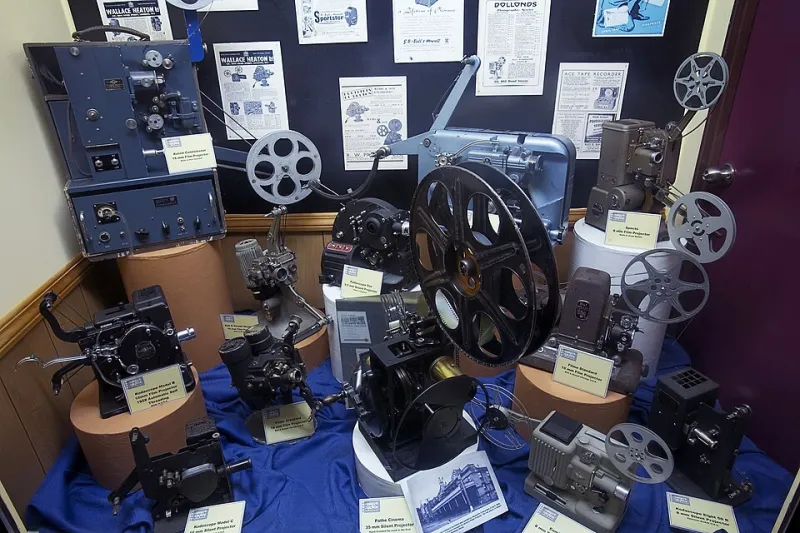
Photo: Jorge Royan, CC BY-SA 3.0, via Wikimedia Commons
Somewhere in a suburb of Columbus, Ohio, a 24-year-old named Delia has a hard drive containing every episode of a Canadian sketch comedy series that aired for two seasons in 1994, a complete run of a mid-2000s sci-fi drama that was quietly removed from every streaming platform in 2021, and a digitized VHS transfer of a regional horror anthology that was never commercially released. She found all of it. She downloaded all of it. And she considers it one of her most meaningful hobbies.
"People collect sneakers, people collect vinyl," she says. "I collect things that would otherwise disappear."
Delia is part of a quietly expanding community of entertainment enthusiasts who've turned the act of hunting down and archiving obscure, out-of-print, and algorithmically buried content into something that feels less like casual media consumption and more like a calling.
The Streaming Impermanence Problem
To understand why this hobby exists, you have to understand what streaming has done to the cultural permanence of entertainment. The promise of streaming was always abundance — everything, everywhere, instantly. What the pitch left out was the asterisk: for now, subject to change, license agreements permitting.
In reality, streaming platforms remove titles constantly. Sometimes it's a licensing dispute. Sometimes it's a rights reversion. Sometimes a show gets quietly delisted because a studio wants to repackage it, or because an algorithm decided it wasn't generating enough engagement to justify the hosting costs. The result is a media landscape where things disappear without warning — often without any announcement at all.
The website "What Left Netflix" has documented thousands of titles that have vanished from that platform alone. Beloved shows like "The Office" moved. Cult films came and went. Entire seasons of international dramas evaporated. Users would go looking for something they'd half-watched months earlier and find nothing but a blank search result.
For a certain kind of entertainment fan, this is intolerable. And it's driving them to download.
The Archaeology of Forgotten Entertainment
There's a word that keeps coming up in conversations with people inside this community: archaeology. They describe their hobby in terms of excavation and discovery, of brushing dust off something that was almost lost.
Jordan, a 31-year-old librarian in Portland, got into what he calls "media preservation" after a show he'd been watching on a smaller streaming service disappeared mid-season with no explanation. "I never found out how it ended," he says. "That bugged me for months. So I started learning how to find things that weren't easily accessible. And then I just... kept going."
His current archive includes several films from the early 1970s that have never received proper digital releases, a collection of made-for-TV movies from the 1980s that exist in almost no streaming library, and what he believes is a complete run of a short-lived animated series that aired on a regional cable channel in the mid-1990s. "Some of this stuff, I might be one of a few hundred people who have it," he says. "That's a weird feeling, but it's also kind of a responsibility."
This sense of responsibility — the feeling that someone has to keep these things alive — is a recurring theme. The community frames itself not as hoarders but as stewards.
Cult Cinema as Cultural Identity
For younger generations in particular, the hunt for obscure and forgotten content has taken on an almost identity-forming quality. In an era when mainstream culture feels simultaneously oversaturated and algorithmically homogenized, seeking out the buried, the weird, and the overlooked is a form of self-definition.
Platforms like Letterboxd have helped formalize cult cinema fandom, giving users a space to log and discuss films that never made it into the mainstream conversation. But Letterboxd can only log films — it can't deliver them. When a cult classic isn't available to stream anywhere, downloading becomes the only path to actually watching it.
This creates a natural pipeline from film discovery communities into download culture. You hear about a 1982 Italian horror film from a Letterboxd friend. It's not on any platform. You find it elsewhere, download it, watch it, add it to your collection. Repeat. Over time, you've built an archive that reflects your actual taste rather than whatever three platforms happen to be licensing this quarter.
"My downloaded collection is basically a self-portrait," says Keisha, a 27-year-old film student in Atlanta. "It's the stuff I actually care about, not the stuff an algorithm decided I should care about."
The Line Between Fandom and Preservation
The conversation around downloading obscure content is complicated, and it's worth acknowledging that honestly. Rights holders have legitimate interests. Creators deserve compensation. The legal landscape around downloading varies significantly depending on what you're downloading and where you're getting it from.
But there's also a real cultural loss happening when content disappears from every available platform and no official digital release exists. Film historians and archivists have documented thousands of films that exist only in degraded physical formats or not at all. The Library of Congress has estimated that roughly 70% of all silent films are lost forever. The community of enthusiasts who hunt down and preserve obscure content — whatever the legal complexities — is doing something that official channels often aren't.
This is the tension that makes the hobby genuinely interesting to think about. It sits at the intersection of fandom, preservation, and a particular kind of cultural defiance.
A Different Relationship With Entertainment
What unites everyone in this community, regardless of their specific focus, is a fundamentally different relationship with entertainment than the one streaming services are designed to create. Streaming wants passive consumption — scroll, click, watch, repeat. The obscure content community wants active curation, deliberate discovery, and genuine ownership.
At DownloadMing, that's a distinction we find pretty compelling. There's something meaningful about building a media library that reflects who you are rather than what an algorithm thinks you should watch next. Whether you're downloading a new release for a flight, building an emergency collection, or hunting down a forgotten gem from 1978, the act of choosing and keeping your own content is its own kind of statement.
Delia in Columbus puts it simply: "I want to watch things because I decided they matter, not because they showed up in my recommendations. And I want to still have them next year, regardless of what some streaming executive decides to do with the licensing rights."
That's not just a hobby. That's a philosophy.